
Names
- Shukra — Venus, ruler of Friday. Bhargava, guru of the daityas.1
Teacher of the Asuras
The Mahabharata’s Sambhava Parva calls the Asuras’ priest the learned Ushanas, also named Kavya and Shukra. He is set against Vrihaspati, the priest of the gods, in their long contest for the three worlds. Venus thus enters the epic as a Brahmana sage serving the opponents of the gods.2
His advantage is a specific knowledge: Ushanas can revive Asuras killed in battle, a science that Brihaspati does not have. The epic presents him as a teacher of great prowess whose loyalty to his patrons is real but limited by his attachment to his daughter.2
Devayani and Kacha
Kacha, Brihaspati’s son, became Ushanas’s pupil on the gods’ advice to win Devayani’s favour. The Asuras killed Kacha repeatedly, and each time Devayani’s grief moved her father to restore him. When Kacha’s ashes were secretly mixed into Ushanas’s wine, the teacher found his student inside his own body. The only way out was to teach Kacha the science of revival, which the pupil then used to restore his teacher.2
Ushanas’s response was to forbid wine: any Brahmana who drank it from that day would lose his virtue and be counted as guilty of a grave sin. In the epic, then, Venus’s teacher both enables the gods’ victory and lays down a lasting rule of conduct.2
Sides in the Tarakamaya war
In the Vishnu Purana’s account of Tara, Ushanas sides with Soma out of enmity to Brihaspati after Soma carries off Brihaspati’s wife. The rivalry of the two planetary teachers shapes this war too, on the opposite side from Rudra, who supports Brihaspati.3
Venus in Puranic cosmology and Jyotisha
The Vishnu Purana’s planetary chapter says the vast car of Shukra is drawn by earth-born horses. Chapter 3 of the Brihat Parasara Hora Sastra, in Santhanam’s translation, associates Venus with semen or potency and gives it a variegated colour. It names Sachi Devi, Indra’s consort, as presiding deity and classes Venus as female.45
The female classification and Sachi as presiding deity contrast with the male teacher of the epic narrative. Readers should keep the astrological category separate from the mythological person, as with the Moon and Mercury.52
Venus in early sculpture
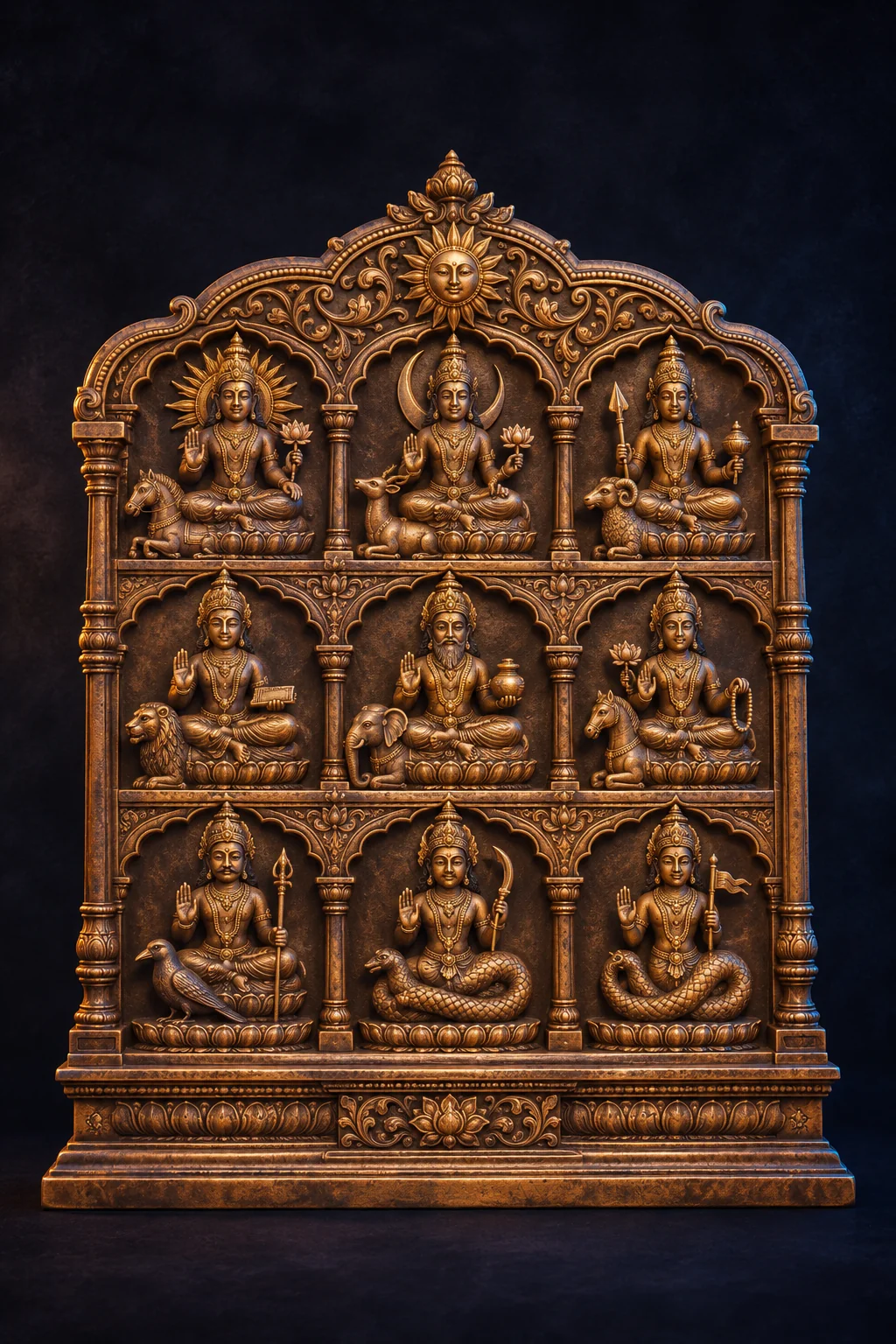
Venus is among the planetary figures on LACMA’s c. 600–625 lintel and the Cleveland Museum of Art’s 700s relief. Cleveland notes that its Moon, Mercury, Venus, Mars and Jupiter are nearly identical, so the sage-teacher is identified by his place in the row, not by individual attributes.67
Sources
- Primary text in translation Translated by Kisari Mohan Ganguli, Mahabharata, Adi Parva (Sambhava Parva), Section LXXVI — SriPedia e-books (ibiblio) · Book 1, Sambhava Parva, section LXXVI: Usanas and Vrihaspati as priests; Kacha and Devayani · accessed 2026-11-03
- Primary text in translation Translated by Horace Hayman Wilson, Vishnu Purana, Book IV: Dynasty of the Moon, an account of Tara — Wisdom Library (online edition of the 1840 translation) · Book IV, lunar dynasty chapter: Soma, Tara, the Tarakamaya war and the birth of Budha (chapter numbering on the host page differs from some editions) · accessed 2026-11-03
- Primary text in translation Translated by Horace Hayman Wilson, Vishnu Purana, Book II, Chapter XII: Description of the Moon — Wisdom Library (online edition of the 1840 translation) · Book II, ch. XII: chariots of the Moon and of the planets; cords binding them to Dhruva · accessed 2026-11-03
- Classical Jyotisha text in modern translation Translated by R. Santhanam, Brihat Parasara Hora Sastra, Chapter 3: Planetary Characters and Description — Ranjan Publications (digitised volume 1, Internet Archive) · Vol. 1, ch. 3, approx. vv. 11–30 (verse labels in the digitised text are partly illegible) · accessed 2026-11-03
Researched 2026-11-08 from the cited sources. Community corrections are welcome; traditions differ, and differences are shown rather than resolved.