Names
- Surya — the Sun, ruler of Sunday. Of Kashyapa’s line in the Navagraha hymn.1
The all-seeing Sun of the Rig Veda
Rig Veda 1.50, attributed to the seer Praskanva Kanva, is one of the best-known hymns to Surya. In H. H. Wilson’s 1866 translation it opens with the Sun’s horses carrying the divine, all-knowing Sun on high so that all the worlds may see him. The hymn presents the Sun as a god who sees everything and is seen by everyone.2
Later in the same hymn, verse 8 says seven coursers bear the Sun in his car. The image of a Sun drawn by horses runs from this hymn into later texts, temple architecture and astrology. This entry follows that thread without assuming that Vedic hymns, Puranic stories and medieval temples express a single, unchanging theology.23
A household of light and shadow
The Vishnu Purana’s third book tells how Sanjna, daughter of the divine craftsman Vishvakarman and wife of the Sun, could not endure her husband’s heat. She left Chhaya, her shadow, in her place as his handmaid. Believing Chhaya to be Sanjna, the Sun had three more children by her: Shanaishchara (Saturn), another Manu named Savarni, and a daughter, Tapati.4
To reduce the Sun’s intensity, Vishvakarman put him on a lathe and ground away part of his radiance. The Purana says the filings were made into divine weapons: the discus of Vishnu, the trident of Shiva, the weapon of the god of wealth and the lance of Kartikeya. In this account the Sun’s surplus light arms other gods.4
Rival of Rahu
In the Mahabharata’s Astika Parva, Surya and Soma recognise the Danava Rahu drinking the amrita in disguise and alert the gods, so Narayana beheads him. The epic says a long-standing quarrel between Rahu’s head and the Sun and Moon followed, and that the head still swallows them during eclipses. Surya’s role in the eclipse story is that of the witness who exposed the thief.5
How sculptors showed the Sun
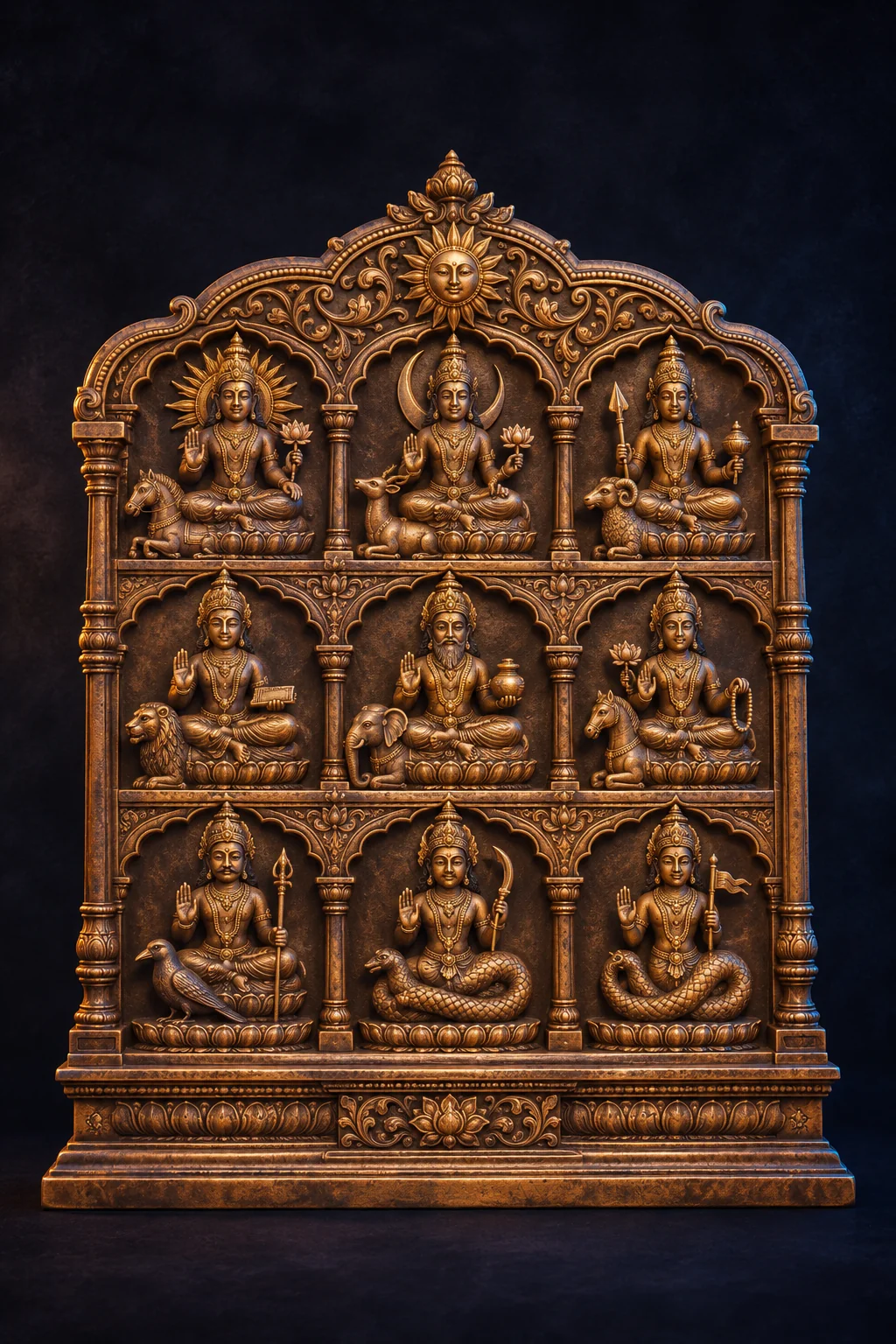
Early Navagraha rows distinguish Surya from the other eight. On LACMA’s lintel from Uttar Pradesh (c. 600–625) he squats at the viewer’s left with a lotus in each raised hand, wearing a conical crown and chest armour. The Cleveland Museum of Art’s Central Indian relief of the 700s gives him a tall crown with the female figure of Dawn before him. The museum notes he is the only figure there shown wearing boots and holding fully opened lotuses.67
Lotuses, crown and a leading position recur in both objects, but the details are those of two particular works. They should not be taken as a fixed rule for every region or period of Surya imagery.67
Konark: a temple as the Sun’s chariot
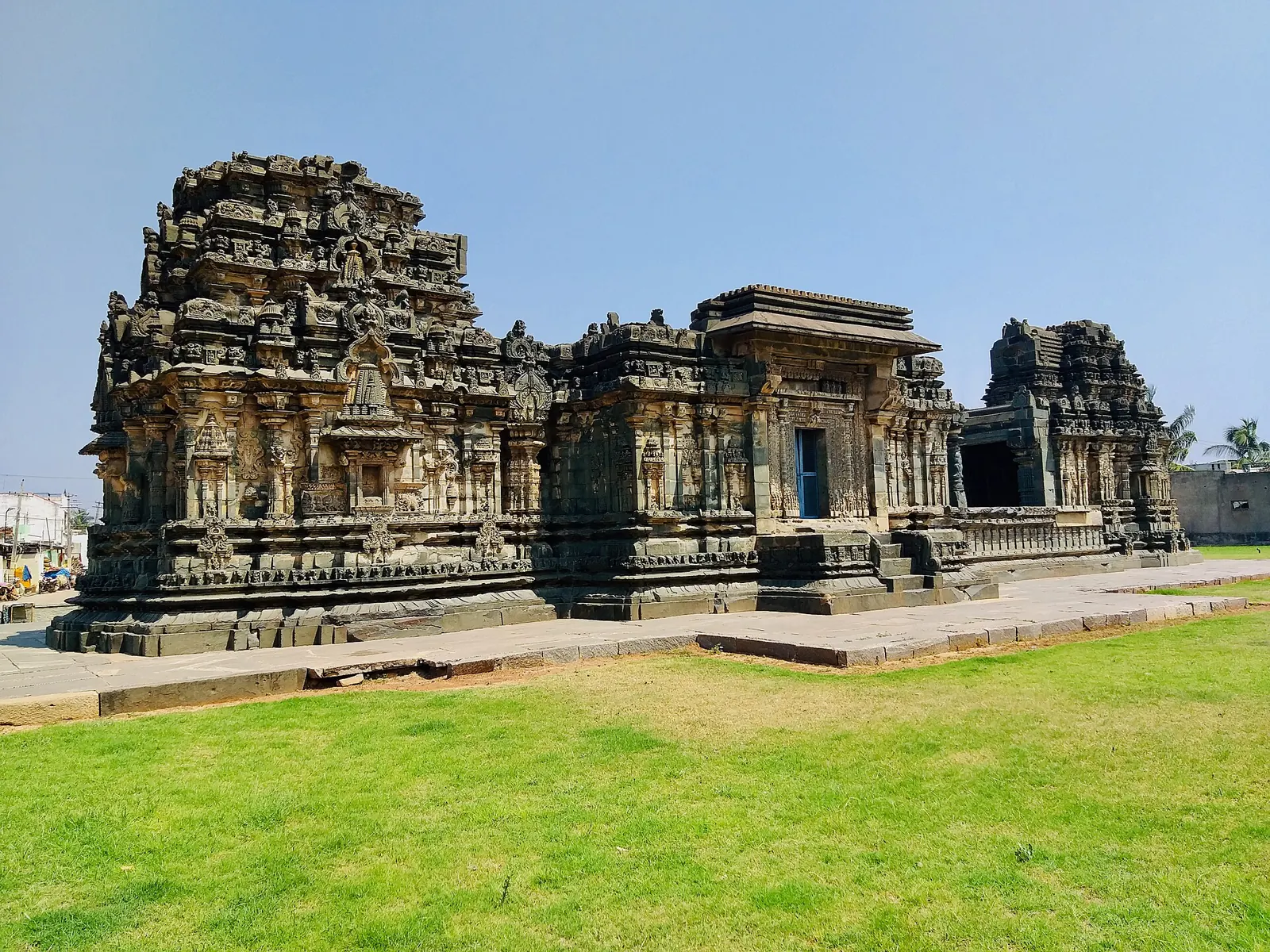
UNESCO’s World Heritage listing describes the thirteenth-century Sun Temple at Konark, on the coast of Odisha, as a monumental representation of the Sun god’s chariot. Its twenty-four carved wheels are decorated with symbolic designs. The temple turns the chariot of the hymns and Puranas into architecture at monumental scale.3
Surya in Jyotisha
Chapter 3 of the Brihat Parasara Hora Sastra, in Santhanam’s translation, calls the Sun the soul of all. It describes him as blood-red and male, with Agni, the fire god, as his presiding deity. Jyotisha practice builds on such classical significations, but this entry records the teaching of one named text, not a prediction or the only astrological view.8
Festival observances linked to the Sun, such as Makar Sankranti and Chhath, are not yet documented here from vetted sources. They are listed among the research still to develop, instead of being summarised from unverified material.83
Where to go next
Sources
- Primary text in translation Translated by Horace Hayman Wilson, Rig Veda 1.50 (Sukta 50, to Surya) — Wisdom Library (online edition of the 1866 translation) · Mandala 1, hymn 50; seer Praskanva Kanva · accessed 2026-11-03
- Heritage site record UNESCO World Heritage Centre, Sun Temple, Konârak — UNESCO · Description; 13th-century temple conceived as the Sun’s chariot · accessed 2026-11-03
- Primary text in translation Translated by Horace Hayman Wilson, Vishnu Purana, Book III, Chapter II: Of the seven future Manus — Wisdom Library (online edition of the 1840 translation) · Book III, ch. II: Sanjna, Chhaya, the children of Chhaya; Vishvakarman trims the Sun · accessed 2026-11-03
- Primary text in translation Translated by Kisari Mohan Ganguli, Mahabharata, Adi Parva (Astika Parva), Section XIX — SriPedia e-books (ibiblio) · Book 1, Astika Parva, section XIX: Rahu drinks the amrita and is beheaded · accessed 2026-11-03
- Classical Jyotisha text in modern translation Translated by R. Santhanam, Brihat Parasara Hora Sastra, Chapter 3: Planetary Characters and Description — Ranjan Publications (digitised volume 1, Internet Archive) · Vol. 1, ch. 3, approx. vv. 11–30 (verse labels in the digitised text are partly illegible) · accessed 2026-11-03
Researched 2026-11-08 from the cited sources. Community corrections are welcome; traditions differ, and differences are shown rather than resolved.