
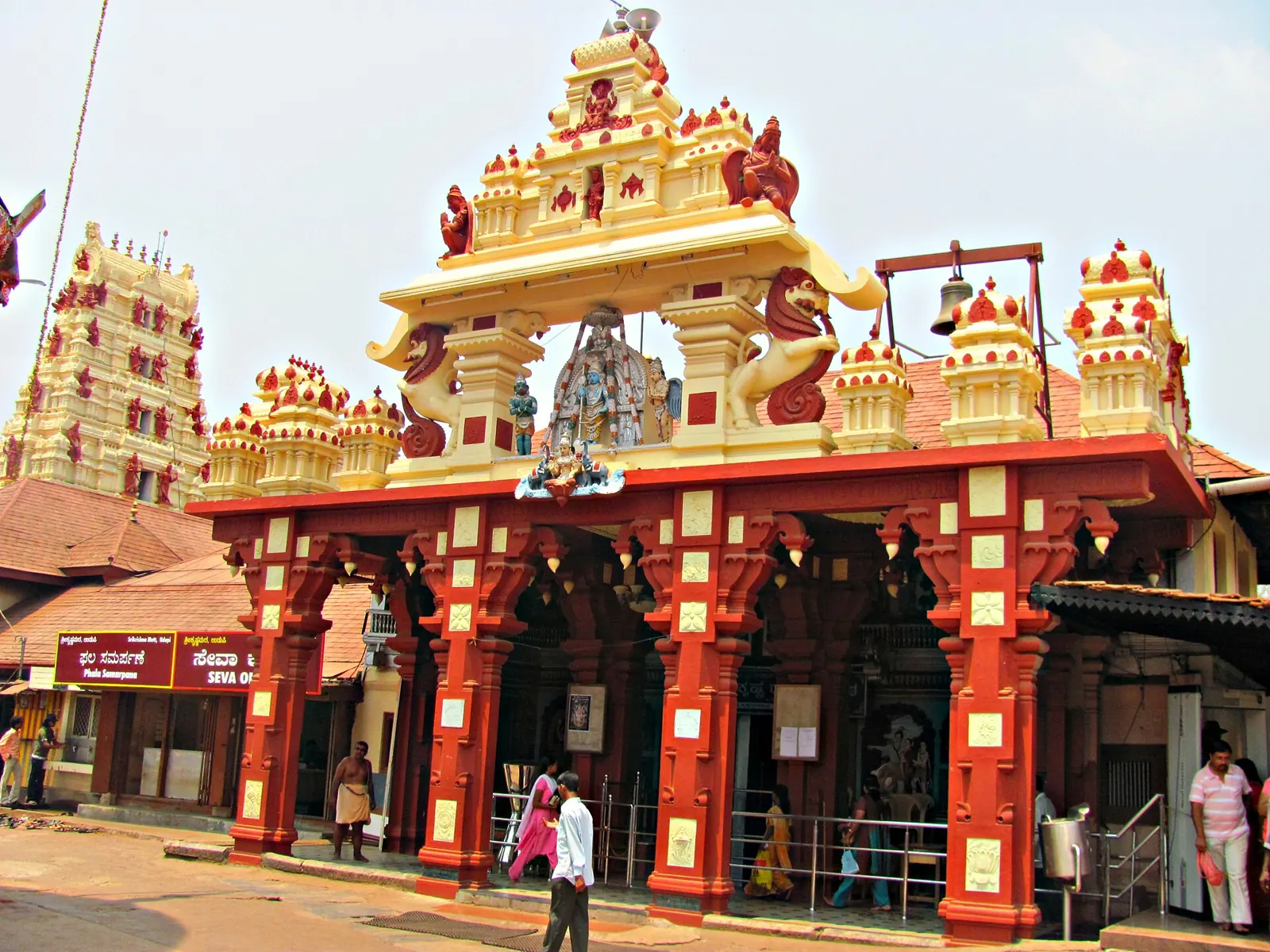
Legend sthala purana · as told by tradition
Temple tradition says Madhvacharya rescued a ship caught in a storm off Malpe; its grateful captain gave him a lump of gopichandana clay, inside which was a stone image of Bala Krishna, said once to have been worshipped by Rukmini. Madhvacharya installed it at Udupi.21
When the sixteenth-century poet-saint Kanakadasa was turned away at the door, he sang behind the temple; Krishna is said to have turned to face west and a window opened in the wall for him.2
Documented history
Madhvacharya, founder of the Dvaita school of Vedanta, established the matha in the thirteenth century as a centre of learning as well as worship, and set up eight monasteries, the Ashta Mathas, to run it.21
The mathas take two-year turns (Paryaya) at the worship and administration, handing over in a public ceremony; the tradition completed 500 years in 2021. The matha lost its large landholdings under Karnataka’s Land Reforms Act in 1975.21
No one views the image directly: every visitor looks through the same silver-plated grille with nine openings, the Navagraha Kindi, in Kanakadasa’s window.2
Where sources differ
Karnataka Tourism gives a building date of about 1238 CE; other accounts give only “the thirteenth century”. GOD VERSE follows the broader date until a dated record is cited.21
Where to go next
 AI-created illustrationKanakadasa’s windowWhy devotees at Udupi see Krishna through a window in the western wall.
- AI-created illustrationThe birth of KrishnaBorn in Kamsa’s prison and carried across the Yamuna to Gokul.
 AI-created illustrationNavaratri and Mysuru DasaraNine nights of the goddess ending on Vijayadashami, Karnataka’s state festival.
 AI-created illustrationKrishna JanmashtamiThe birthday of Krishna, celebrated at midnight.
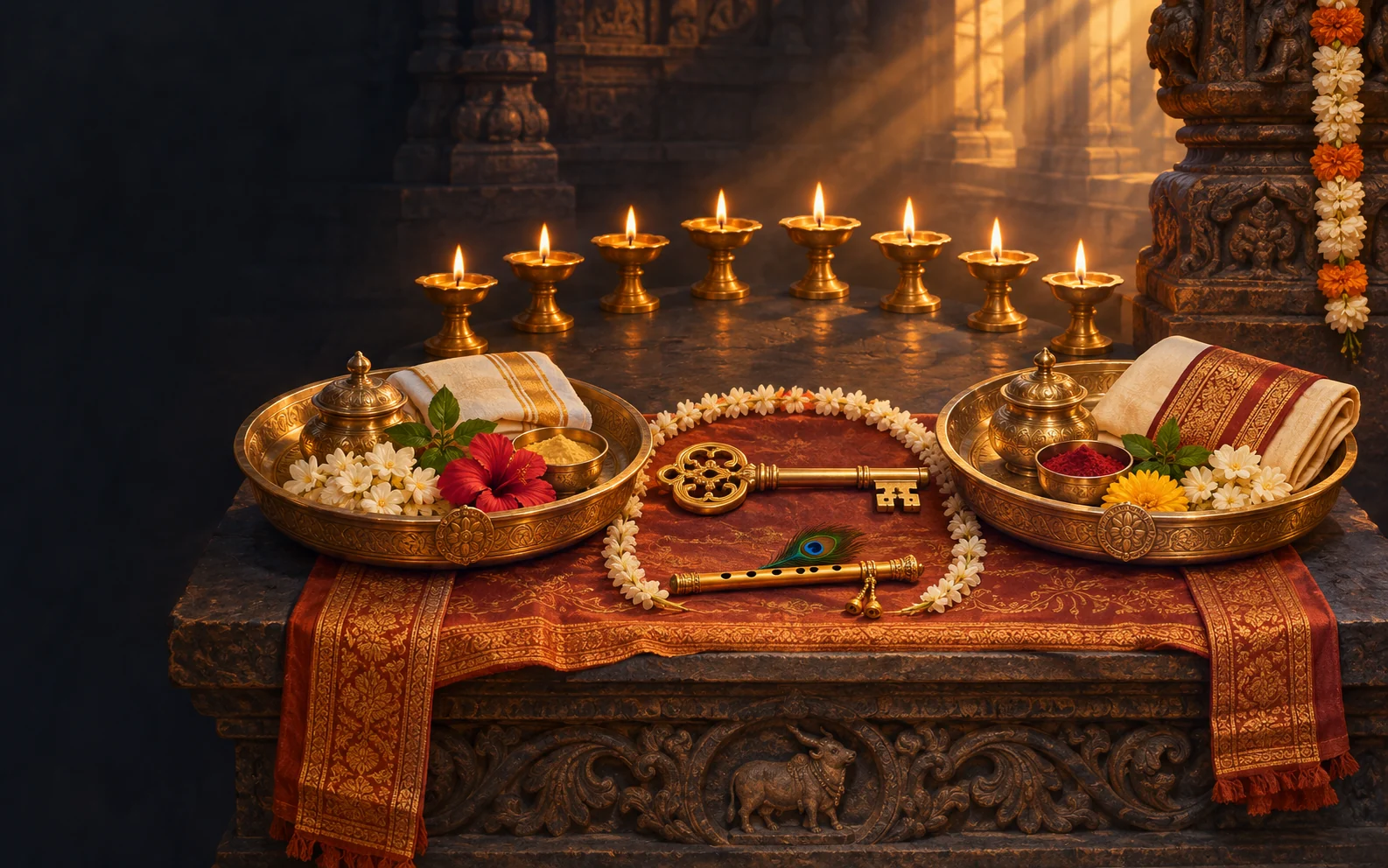 AI-created illustrationUdupi ParyayaThe handover of Krishna’s worship from one of Udupi’s eight mathas to the next.
Sources
- Encyclopedia Udupi Sri Krishna Matha — Wikipedia · accessed 2026-11-08
- Government Udupi Sri Krishna Temple — Karnataka Tourism, Government of Karnataka · accessed 2026-11-08
Researched 2026-11-08 from the cited sources. Community corrections are welcome; traditions differ, and differences are shown rather than resolved.