Names
- Shiva — the Auspicious One1
- Mahadeva — the Great God1
- Maheshvara — Great Lord1
- Parameshvara — Supreme Lord1
- Rudra — the Vedic storm god with whom Shiva is identified1
- Pashupati — Lord of animals (or of cattle)1
- Nilakantha — the blue-throated one, from the poison he held in his throat1
- Gangadhara — bearer of the river Ganga1
- Chandrashekhara — he who wears the moon as his crest1
- Tryambaka — named for his third eye1
- Shankara, Shambhu, Hara, Bhava — further names in common use1
- Mahabaleshvara, Virupaksha, Manjunatha, Murudeshvara — names under which he is worshipped at the Karnataka temples in GOD VERSE2345
Family
- Consorts
- Parvati, Sati
- Children
- Ganesha, Kartikeya (Subrahmanya)
His consort is Shakti in her many forms: Sati, Parvati, Durga and others; his two children are Ganesha and Kartikeya.1
Origins
Shiva is identified with Rudra, the storm god of the Rigveda, and the two names are used as synonyms in scripture; scholars also see non-Vedic roots, with older deities merging into one great god.1
Rudra’s rise to a supreme being is first seen in the Shvetashvatara Upanishad (about 400–200 BCE). By the epics and Puranas “Shiva”, once an epithet, had become his name.1
Iconography
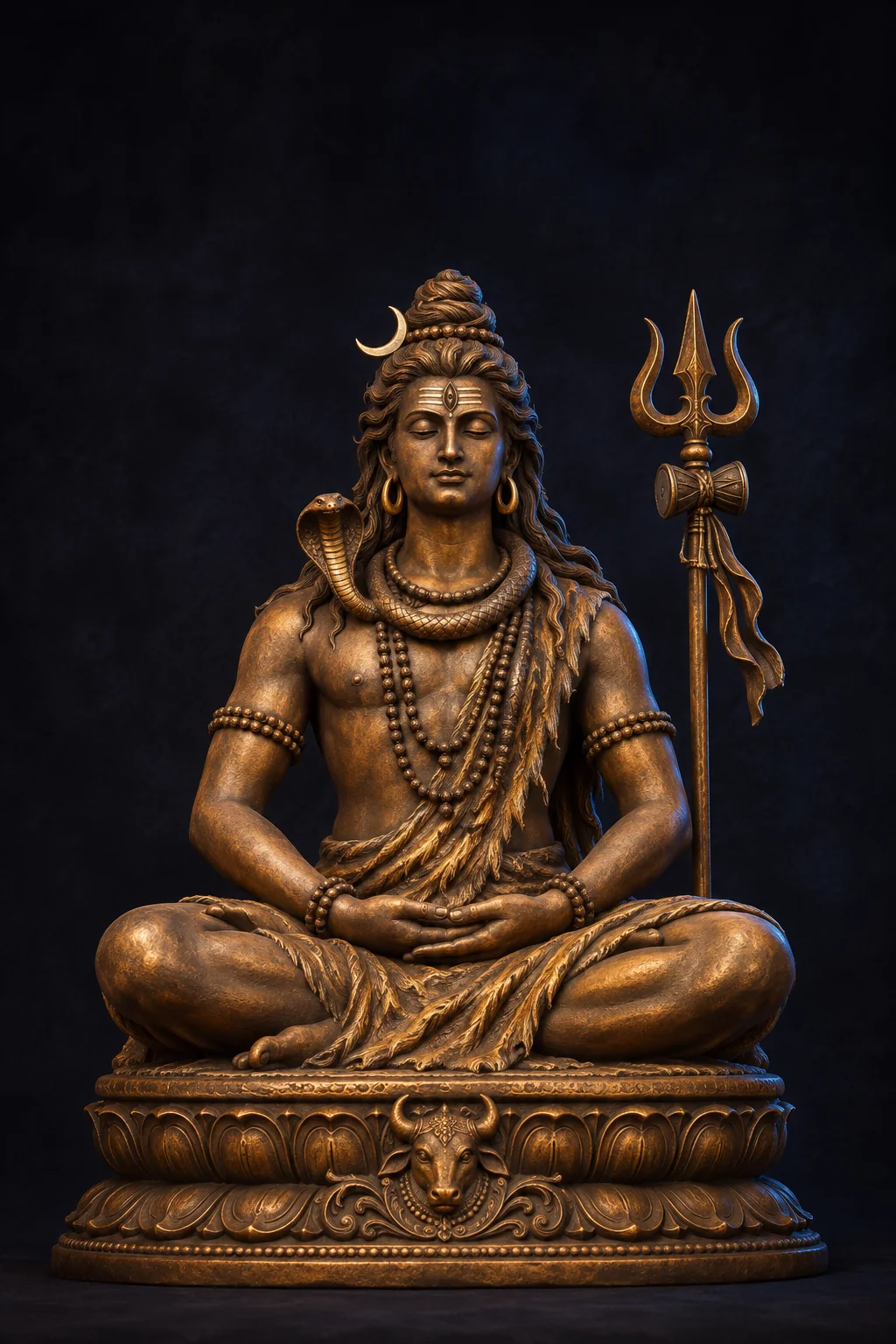
He is shown with a third eye, the crescent moon and the Ganga flowing from his matted hair, carrying a trident; he is very often worshipped in the aniconic linga, with the bull Nandi as his mount.1
Dance and cosmic activity
In the Nataraja image, Shiva’s dance brings together creation, preservation and destruction. The Met’s late-eleventh-century Tamil copper-alloy sculpture holds a drum and fire, offers reassurance with one hand, and points toward a raised foot associated with refuge. The figure beneath the standing foot represents delusion.6
An image with a ritual life
Tamil artists developed an influential bronze form of the dancing Shiva under royal patronage. These were devotional images with lives in temples and processions, not simply decorative sculptures. The Smithsonian’s account relates the image to Tamil religious poetry and continuing worship.7
Scope and variation
This entry concerns Nataraja imagery, especially Tamil bronze traditions. It does not define every Shaiva understanding of Shiva or every historical dancing form.76
How traditions differ
Shaivism
Shiva is the Supreme Being who creates, preserves, destroys and transforms the universe.1
Trimurti and Smarta worship
He is the destroyer or transformer beside Brahma and Vishnu; in Smarta Panchayatana puja he is one of five equal deities.1
Vaishnava texts
Vishnu is supreme, yet Shiva is revered; the Skanda Purana even says “Vishnu is no one but Shiva”.1
Where to go next
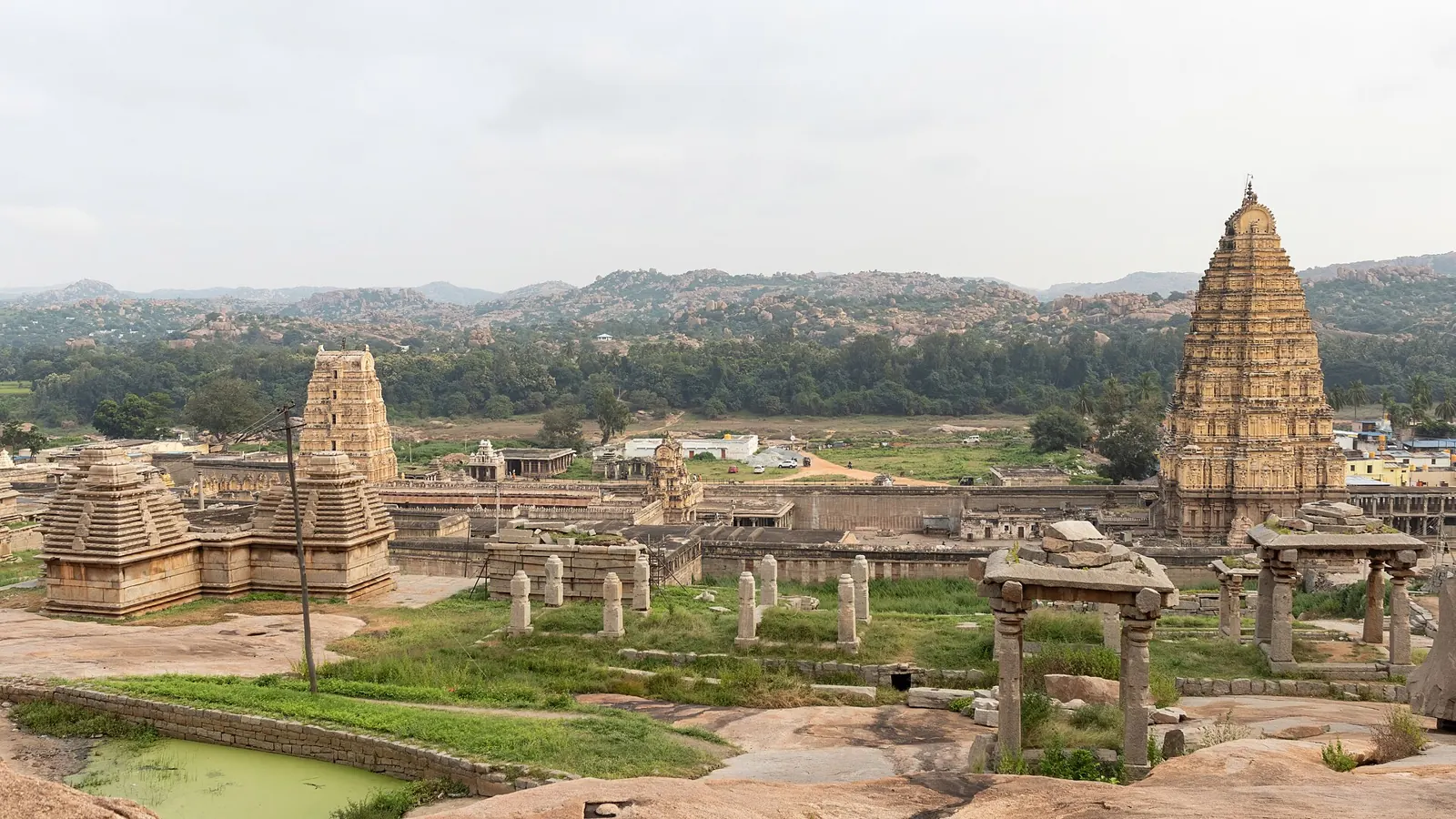 Virupaksha Temple, HampiShiva as Virupaksha, Pampapati, in continuous worship since the seventh century at the heart of Hampi.
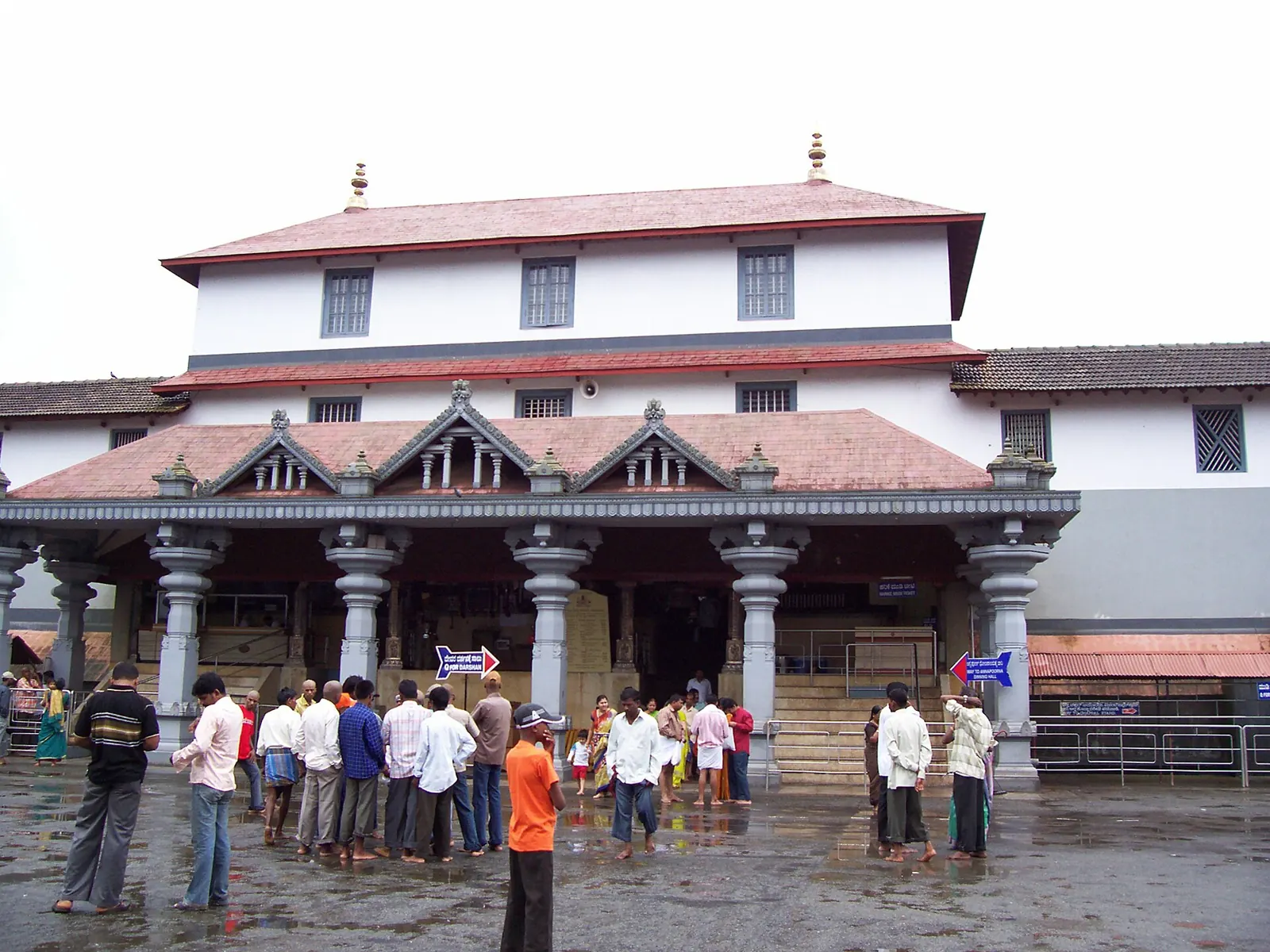 Sri Manjunatha Temple, DharmasthalaA Shiva temple served by Vaishnava priests and administered by a Jain family, with the Dharma Daivas.
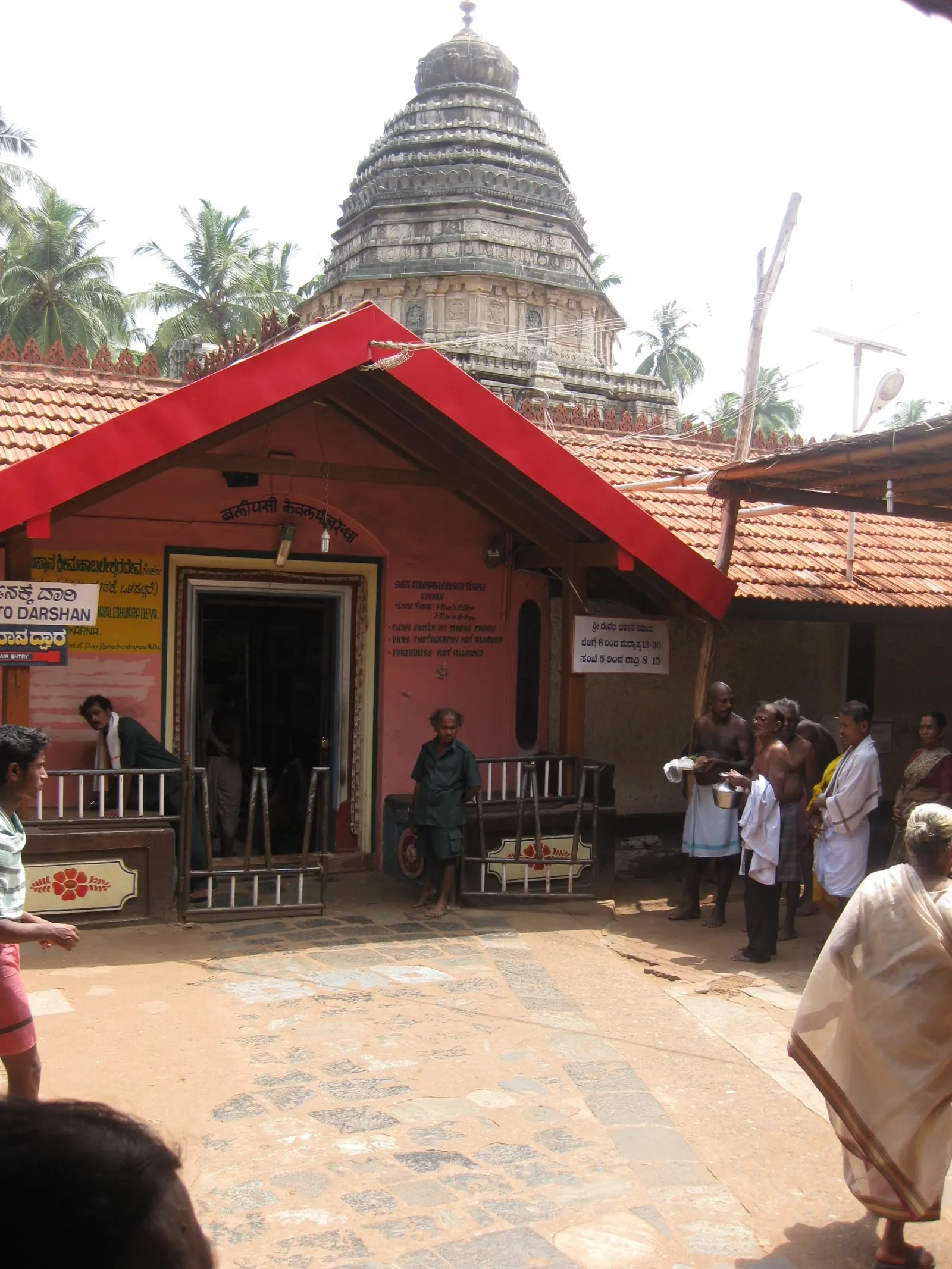 Mahabaleshwar Temple, GokarnaHome of the Atmalinga, Shiva’s own linga, which devotees may touch; one of Karnataka’s seven Muktisthalas.
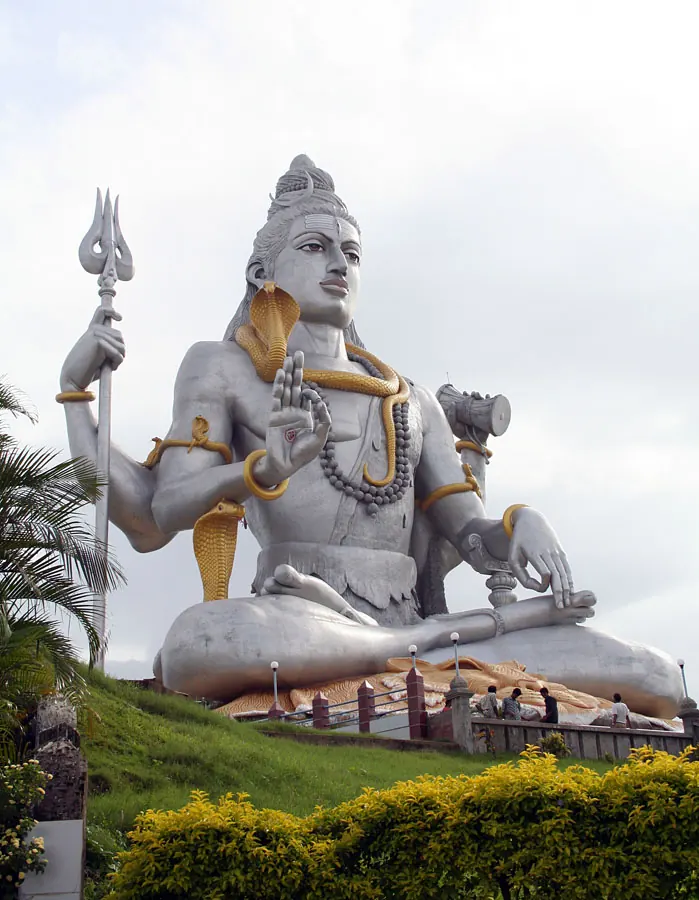 Murudeshwar TempleA seaside Shiva temple of the Atmalinga legend, with a 20-storey gopura and a giant Shiva.
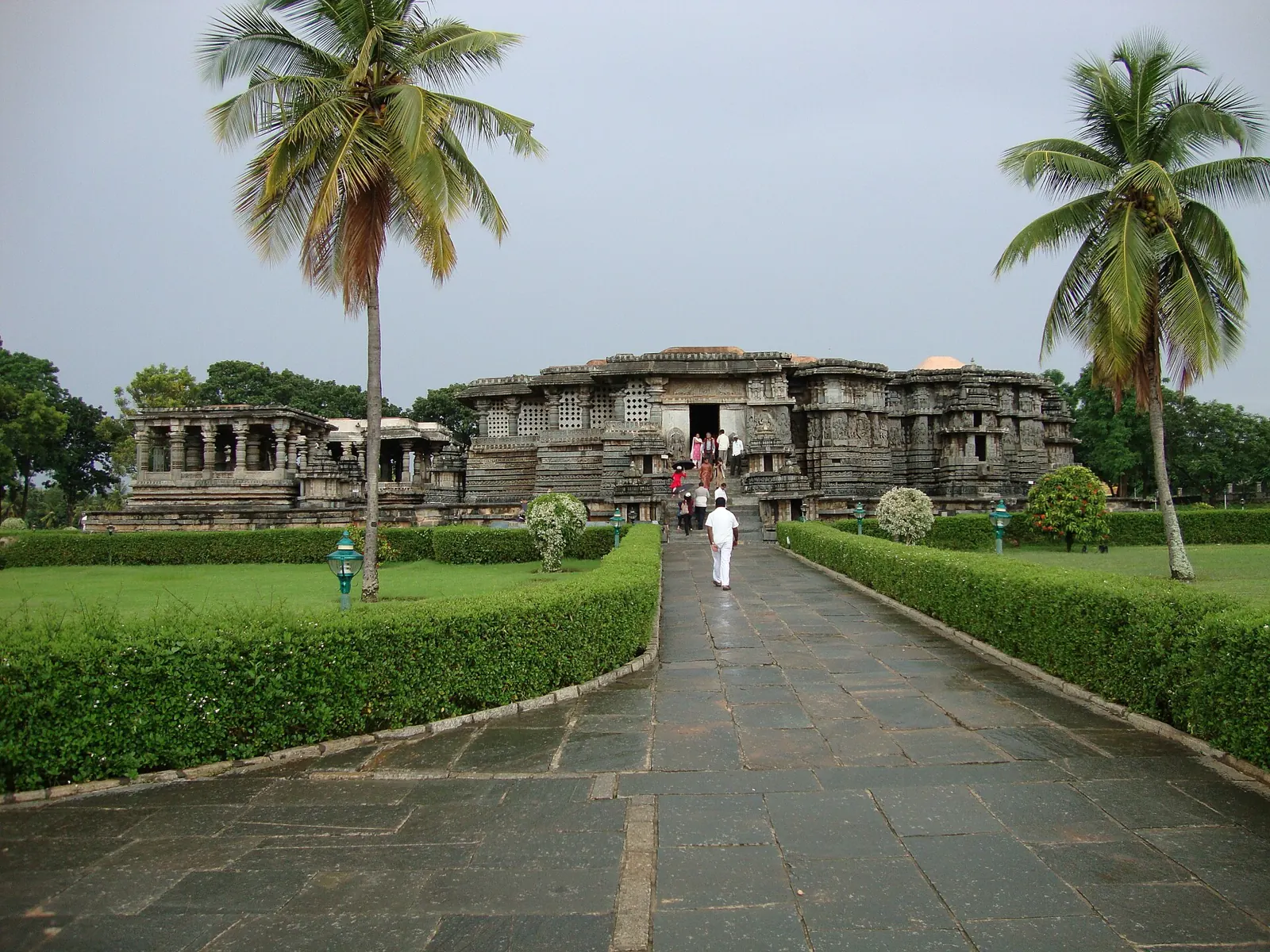 Hoysaleswara Temple, HalebiduTwin Shiva shrines for King Vishnuvardhana and Queen Shantala in the old Hoysala capital, unfinished and no longer in worship.
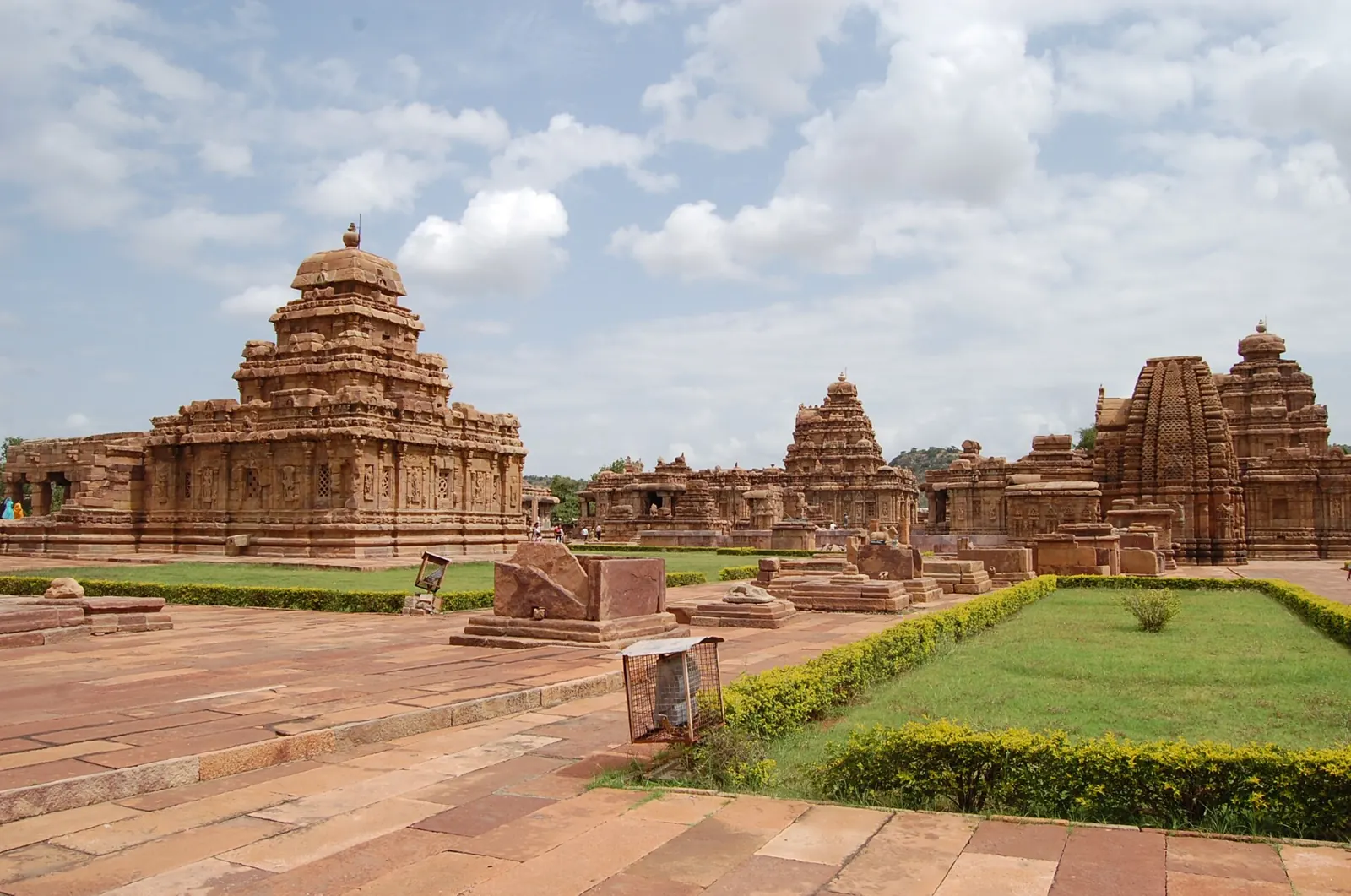 Virupaksha Temple, PattadakalQueen Lokamahadevi’s eighth-century Chalukya temple, model for Ellora’s Kailasa and still in worship.
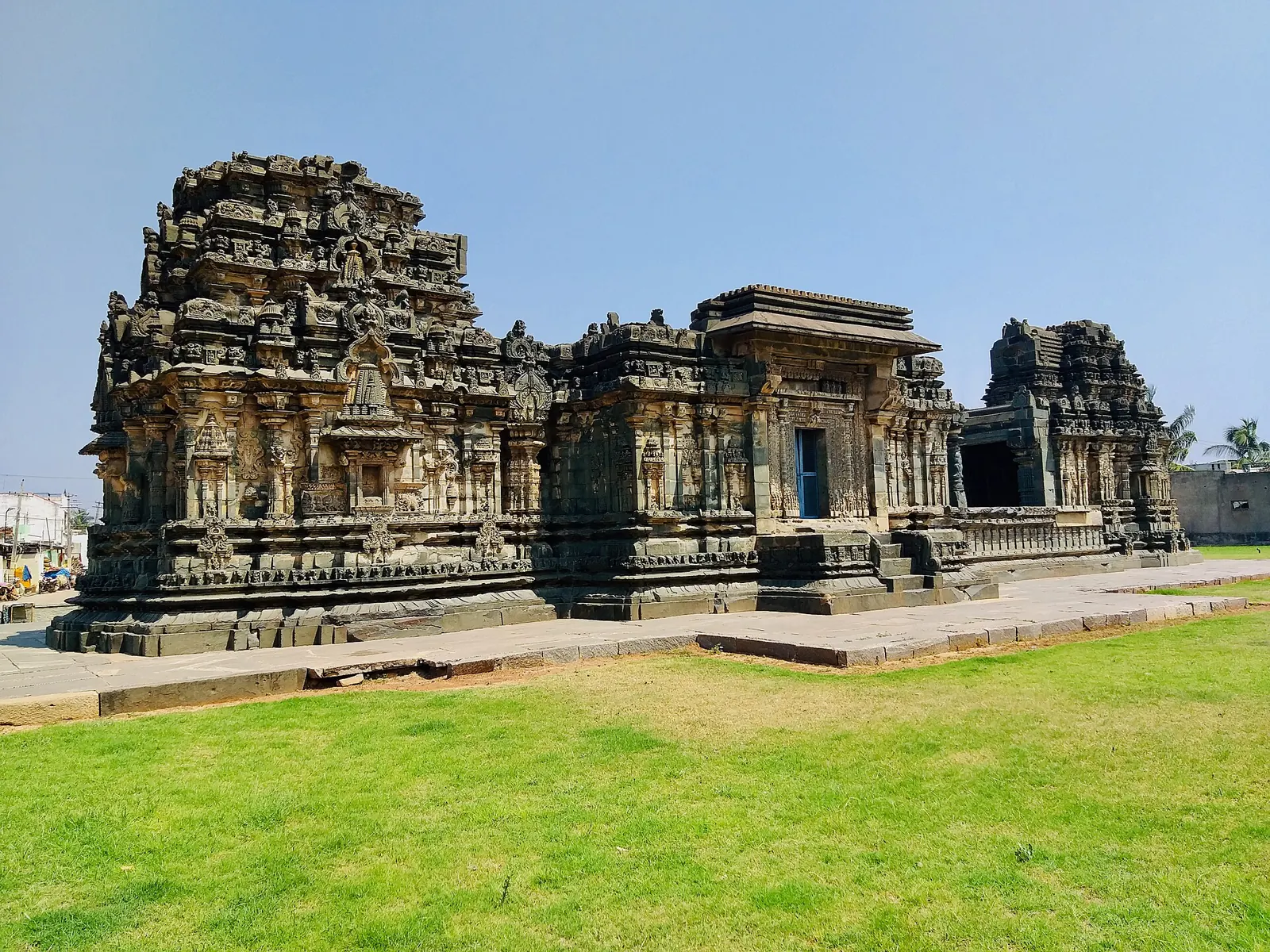 Kasivisvesvara Temple, LakkundiA Kalyani Chalukya double shrine of Shiva and Surya, the high-water mark of Chalukyan decorative carving.
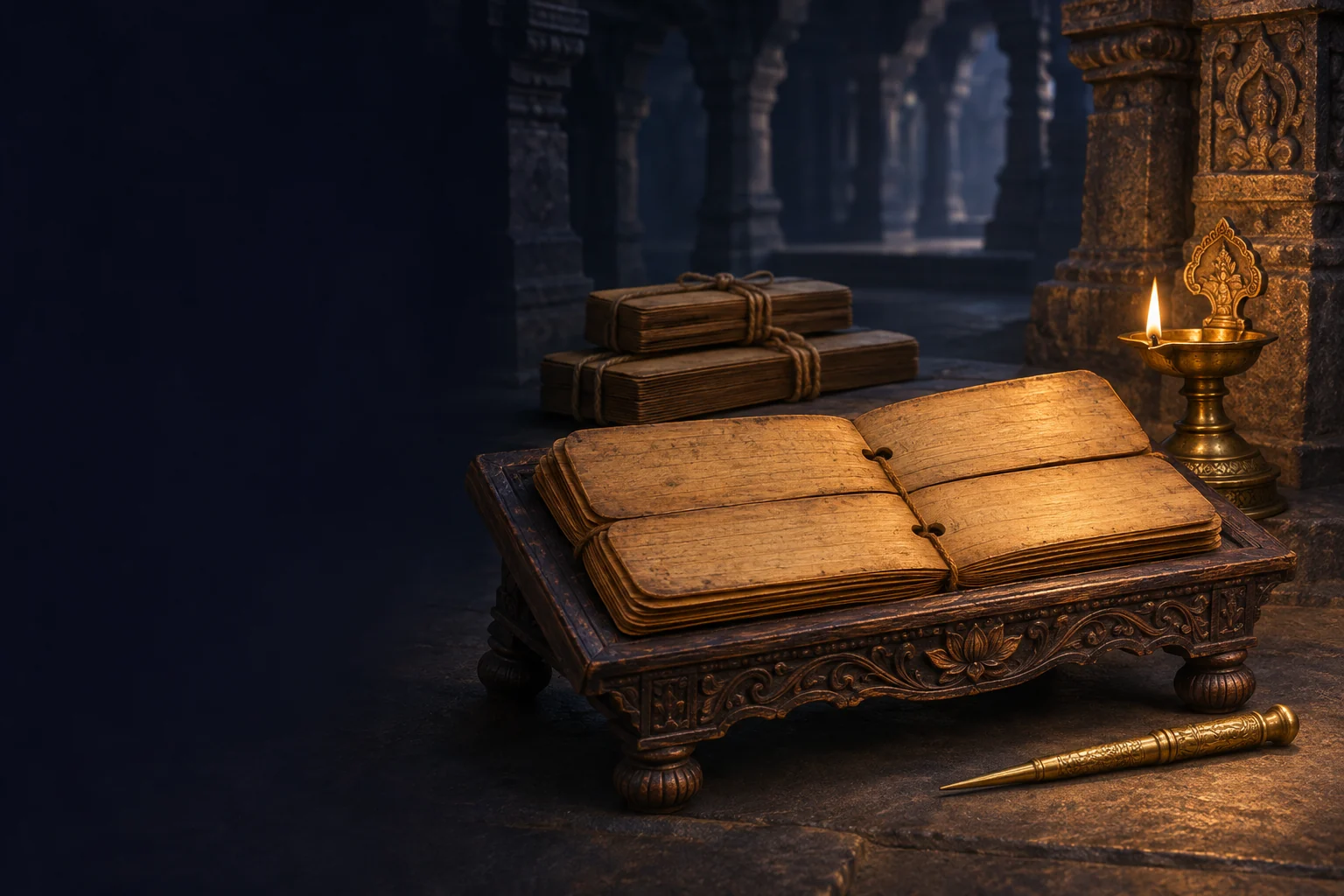 AI-created illustrationRavana and the AtmalingaHow Shiva’s own linga came to rest at Gokarna, and why Murudeshwar is part of the same story.
- AI-created illustrationThe birth of KartikeyaThe son born to defeat Tarakasura, and the battle remembered near Kukke Subramanya.
- AI-created illustrationHow Ganesha got his elephant headSeveral tellings of the birth of the elephant-headed god.
- AI-created illustrationThe Dharma Daivas of DharmasthalaHow a Jain chieftain’s house became a temple of Shiva.
- AI-created illustrationNilakantha: the poison in Shiva’s throatWhy Shiva is called the blue-throated one.
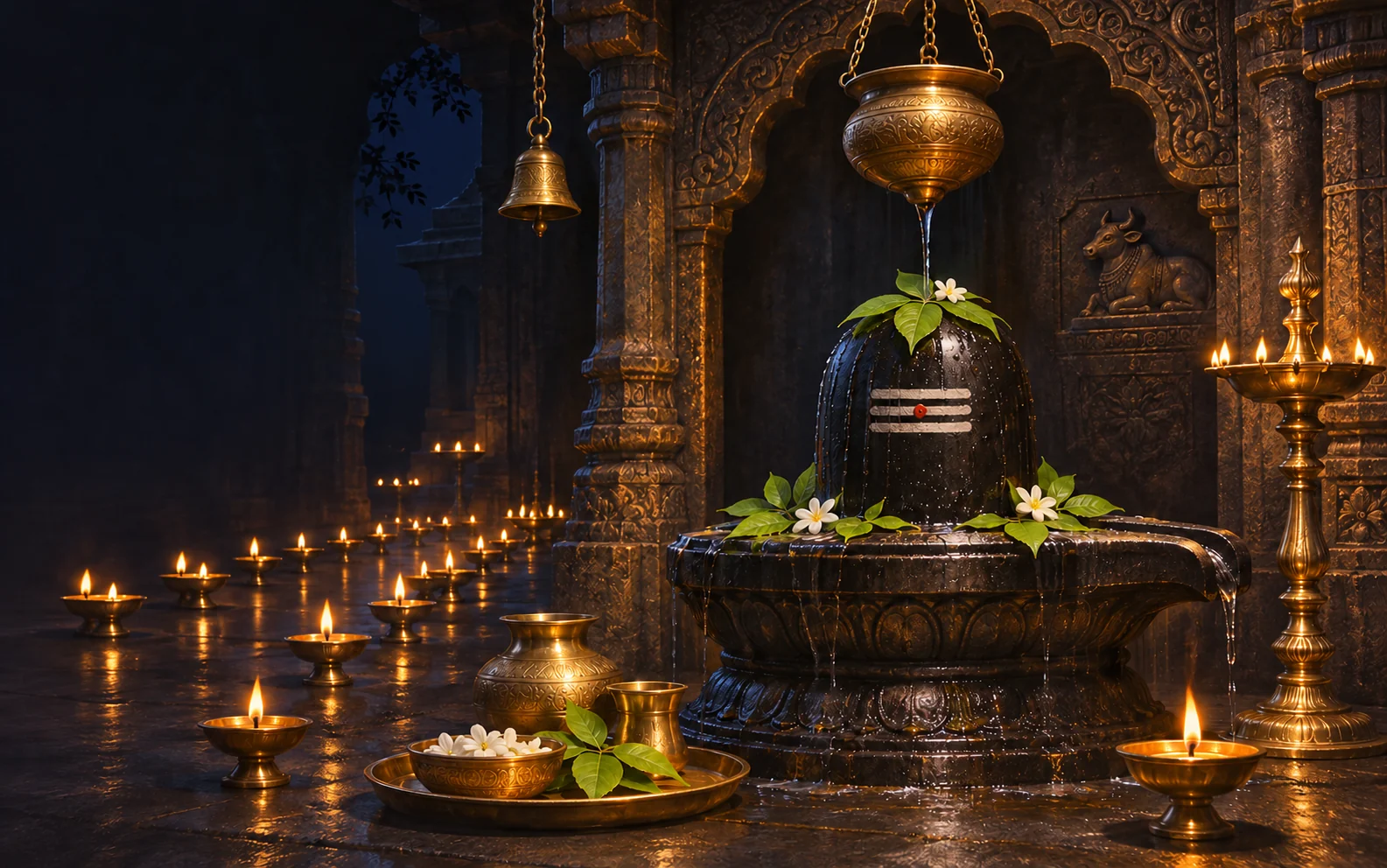 AI-created illustrationMaha ShivaratriThe great night of Shiva: fasting, linga worship and an all-night vigil.
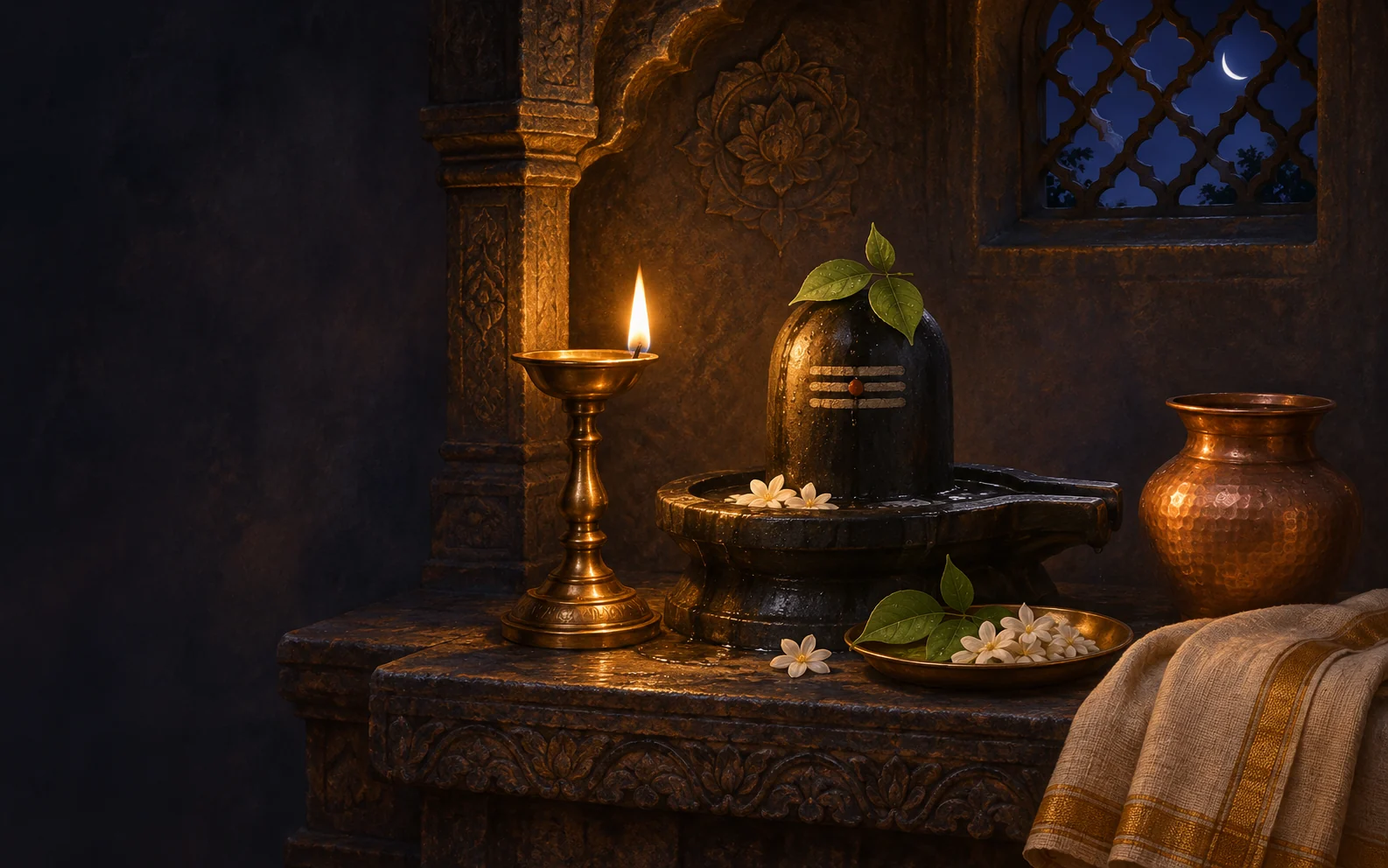 AI-created illustrationMasa ShivaratriThe monthly night of Shiva on every waning-moon Chaturdashi.
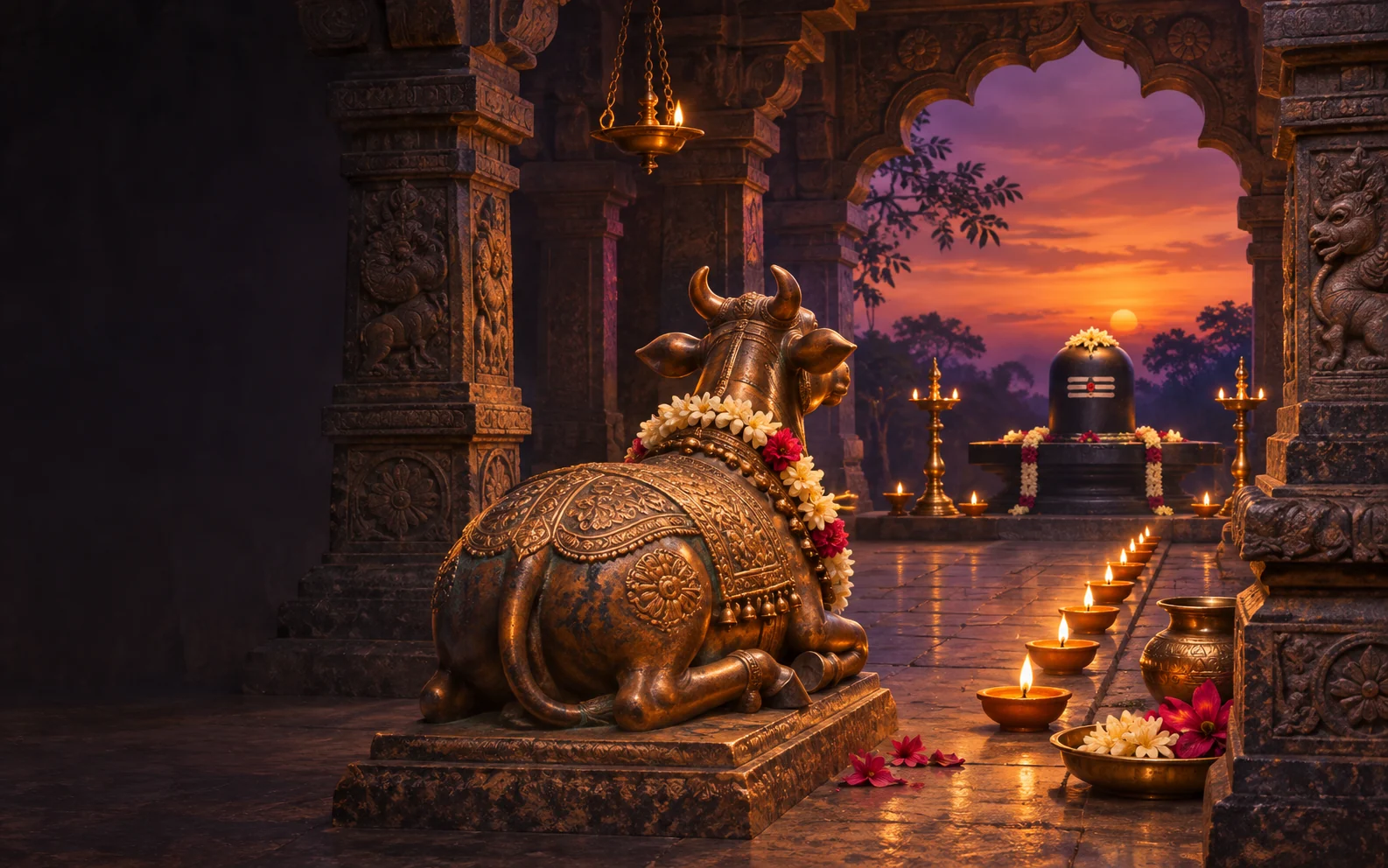 AI-created illustrationPradoshaTwilight worship of Shiva and Nandi on the thirteenth lunar day.
Sources
- Encyclopedia Shiva — Wikipedia · accessed 2026-11-08
- Encyclopedia Mahabaleshwar Temple, Gokarna — Wikipedia · accessed 2026-11-08
- Encyclopedia Virupaksha Temple, Hampi — Wikipedia · accessed 2026-11-08
- Encyclopedia Dharmasthala Temple — Wikipedia · accessed 2026-11-08
- Encyclopedia Murudeshwar — Wikipedia · accessed 2026-11-08
- Collection record Department of Asian Art, Shiva as Lord of Dance (Nataraja) — The Metropolitan Museum of Art · Object 1987.80.1; description and artwork details · accessed 2026-11-02
- Museum interpretation National Museum of Asian Art, India: Shiva Nataraja (Lord of the Dance) — Smithsonian Institution · Overview; Shiva Nataraja F2003.2 · accessed 2026-11-02
Researched 2026-11-08 from the cited sources. Community corrections are welcome; traditions differ, and differences are shown rather than resolved.